---In the early summer season, the verdant scenery of
West Lake and the surging tides of the Qiantang River
provided a fitting backdrop for international exchange
and cooperation. From 4 to 17 June 2026, the Seminar on
Dam Safety Management for Belt and Road Countries and
the Seminar on Capacity Building for Digital Solutions
for the Safety of Reservoirs, Dams, and Ecosystems for
Belt and Road Countries, organized by the National Research
Institute for Rural Electrification, MWR, P. R. China
/ Hangzhou Regional Center (Asia-Pacific) for Small Hydro
Power (HRC), were successfully held in Hangzhou. A total
of 57 government officials and technical experts from
11 Belt and Road partner countries successfully completed
the programmes, gaining valuable professional knowledge,
expanding opportunities for international cooperation,
and fostering lasting friendships.
As an ancient Chinese saying goes, "The highest
virtue is like water, which benefits all things without
contention." These two seminars represent an
endeavor by HRC in supporting the high-quality development
of the Belt and Road Initiative, implementing the Global
Development Initiative, the Global Security Initiative,
the Global Civilization Initiative, and the Global Governance
Initiative, and promoting international capacity building
and human resource development in the water sector.
Focusing on the two themes of dam safety management and
digital solutions for the safety of reservoirs, dams,
and ecosystems, the seminars delivered a comprehensive
programme covering dam operation and safety management,
risk identification and emergency response, intelligent
monitoring and early warning systems, and integrated water
resources utilization. By sharing China's experience and
best practices in water infrastructure development and
governance, the programmes aimed to strengthen participating
countries' capacities to ensure the safety, resilience,
and sustainable development of water infrastructure while
deepening practical cooperation in the water sector among
Belt and Road partner countries. (2026-08-10)
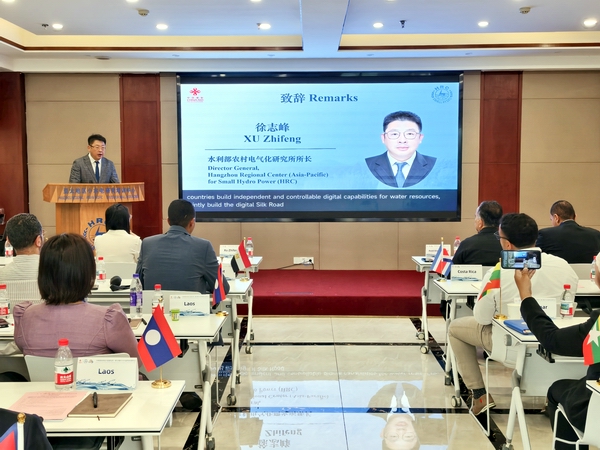
Opening Ceremony
At the opening ceremony, Mr. Xu Zhifeng,
Director-General of HRC, extended a warm welcome to all
participants. He emphasized that dam safety management
and the digital transformation of the water sector play
a vital role in strengthening water security and addressing
the challenges posed by climate change. He encouraged
all participants to make the most of the training opportunity
by engaging actively in learning, exchanging experiences,
and deepening mutual understanding.
Speaking on behalf of the participants, Mr. Ahmed Mohamed
Anwar Mahmoud, Deputy Director-General of the Construction
Research Institute, National Water Resources Research
Center, Ministry of Water Resources and Irrigation of
Egypt, expressed his sincere appreciation to HRC for providing
a valuable platform for mutual learning and exchange.
He noted his expectation of gaining deeper insights into
China's innovative practices and achievements in dam safety
management.
Mr. Awat Anwer Ahmed, Chief Engineer of the Ministry of
Agriculture and Water Resources of the Kurdistan Region
of Iraq, highlighted the important role of digital solutions
in enhancing dam safety monitoring, ecosystem management,
and regional water resources governance. He expressed
his hope that the seminars would enable participants to
acquire valuable knowledge, build lasting friendships,
and create new opportunities for cooperation under the
framework of the Belt and Road Initiative.
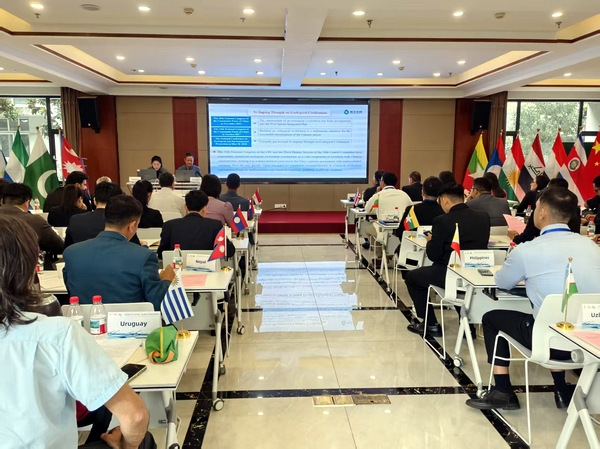
Presentation
The seminars brought together leading experts
and scholars in water resources management, hydropower,
digital technologies, and ecological governance to deliver
a series of thematic lectures. Through expert presentations,
case studies, thematic discussions, and interactive exchanges,
participants gained deeper insights into China's concepts,
approaches, and practical experience in reservoir and
dam safety governance, smart water management, and ecological
conservation.
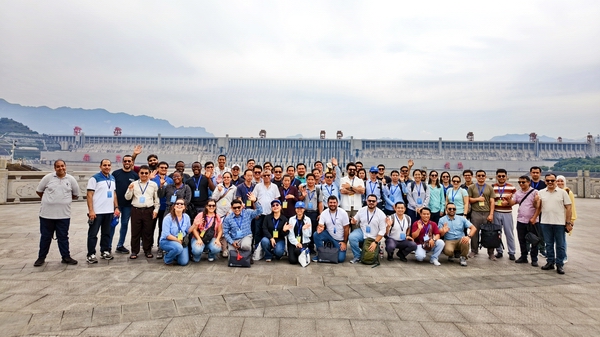
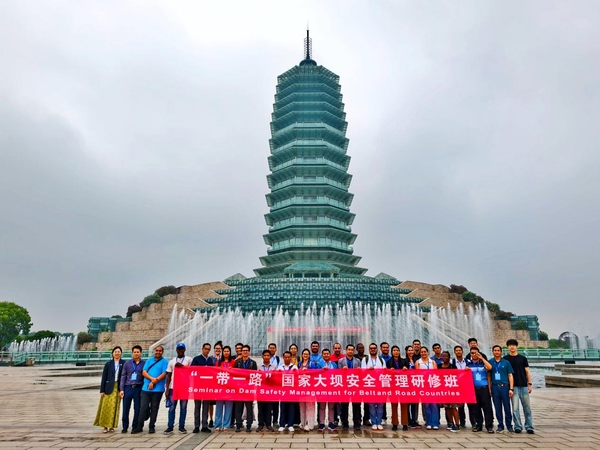
Field Visits
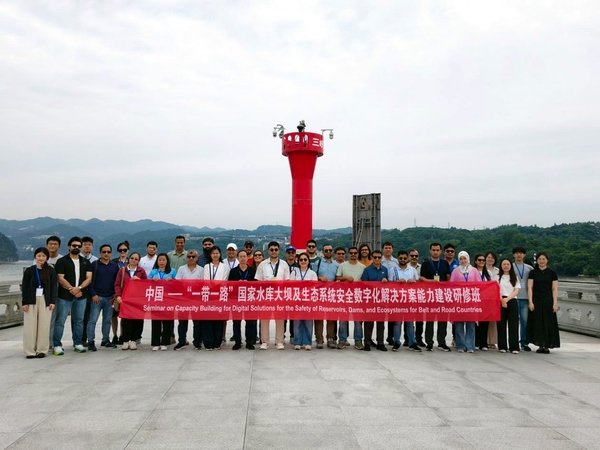
Besides, the seminars also organized technical
visits and field learning activities at major water conservancy
museums, nationally significant water infrastructure projects,
and leading enterprises in smart water technologies. These
visits enabled participants to gain first-hand knowledge
of China's operational and management system for water
infrastructure, observe the application of digital monitoring
technologies and intelligent dispatch platforms, and better
understand how modern water technologies contribute to
ensuring infrastructure safety, improving operational
efficiency, and promoting ecological sustainability.
Cultural Experience
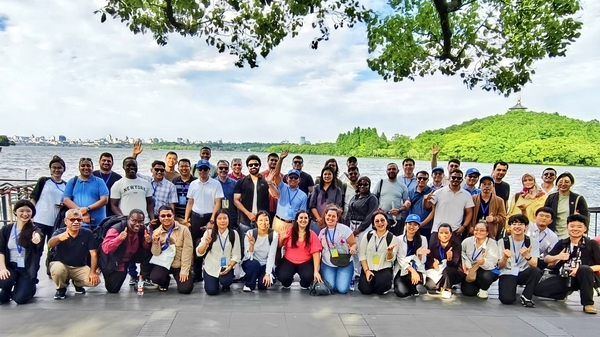
Beyond the professional programme, participants
also experienced the cultural heritage of Hangzhou through
activities such as a boat tour of West Lake. These cultural
experiences offered further insights into China's philosophy
of promoting harmony between humanity and nature while
pursuing coordinated development and security, enriching
participants' understanding of the country's approach
to sustainable development and water governance.
Country Report
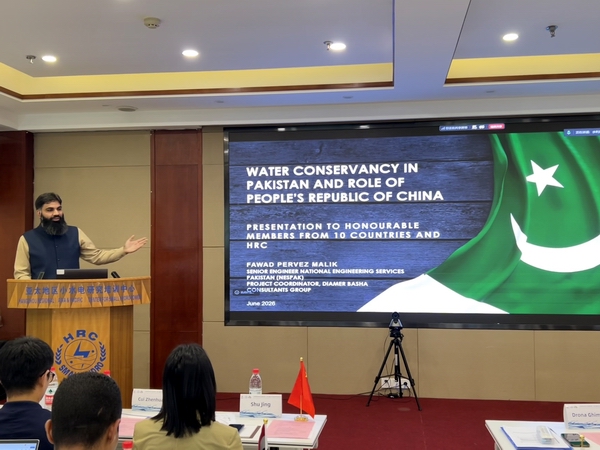
Through open dialogue and mutual learning,
ideas were exchanged, partnerships were strengthened,
and new opportunities for cooperation emerged. During
the seminars, participants shared their countries' experiences,
current challenges, and cooperation needs in the areas
of reservoir and dam construction, operation and maintenance,
disaster prevention and mitigation, ecological conservation,
and digital transformation. Chinese experts and participants
engaged in in-depth discussions on topics including dam
safety monitoring, flood risk management, aging infrastructure
rehabilitation, digital platform development, capacity
building, and project cooperation. These exchanges not
only facilitated the sharing of knowledge and practical
experience but also fostered stronger institutional linkages
and laid a solid foundation for future cooperation.
Participants spoke highly of the seminars, noting that
the programmes were well-structured, practice-oriented,
and highly relevant to their professional needs. They
agreed that the knowledge, case studies, and practical
experience shared during the seminars would provide valuable
insights for advancing dam safety management, digital
transformation, and sustainable water resources development
in their respective countries.
Mr. Htun Soe Wai Lynn, Staff Officer (Civil), Irrigation
and Water Utilization Management Department, Ministry
of Agriculture, Livestock and Irrigation of Myanmar, remarked
that China has accumulated extensive experience in the
safe operation of reservoirs and dams, smart monitoring,
and emergency management. He noted that these practices
offer valuable insights for the development and modernization
of Myanmar's water infrastructure.
Mr. Anup Gautam, Deputy Manager of the Nepal Electricity
Authority, observed that digital solutions have opened
up new possibilities for the management of conventional
water infrastructure. He expressed his hope for expanding
future cooperation with Chinese partners in promoting
digital innovation and sustainable development in the
water sector.
Closing Ceremony
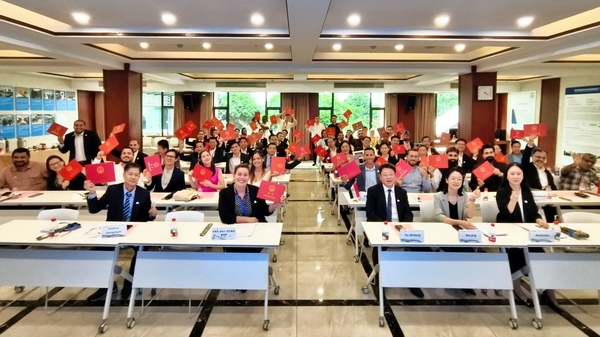
At the closing ceremony, Mr. Xu Zhifeng,
Director-General of HRC, congratulated all participants
on successfully completing the seminars. He emphasized
that, in the face of growing global water security challenges
posed by climate change, HRC stands ready to take these
seminars as a new starting point for deepening cooperation
with partner countries. He expressed HRC's commitment
to expanding collaboration in areas including dam operation
and maintenance, digital governance, joint training programmes,
and professional exchanges, with a view to jointly exploring
digital solutions for water governance that respond to
the practical needs of different countries.
Speaking on behalf of the participants, Ms. María Noel
Gonzalez Rivero, Regional Water Manager, National Water
Directorate, Ministry of Environment of Uruguay, remarked
that the seminars had deepened participants' understanding
of the importance of digital solutions, technological
innovation, and international cooperation in promoting
dam safety and sustainable water resources management.
Mr. Ounchay Sisengchanh, Deputy Director of the Department
of Industry and Commerce, Houaphanh Province of Laos,
noted that the seminars provided participants with valuable
insights into China's modern dam safety management system,
offering useful experience and practical reference for
enhancing dam safety management in their respective countries.
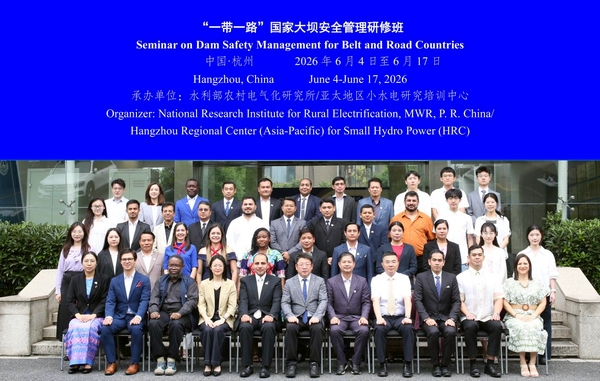
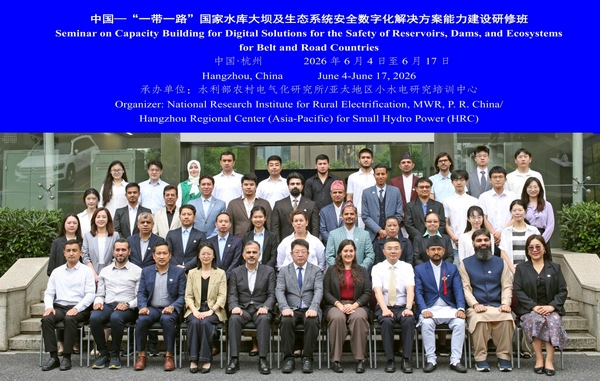
Group Photos of Seminars
The successful completion of these two seminars
has provided an important platform for exchanges and mutual
learning between China and Belt and Road partner countries
in the fields of dam safety management, smart water conservancy,
and ecosystem protection. Looking ahead, HRC will continue
to leverage its strengths in international training and
technical cooperation, working hand in hand with partners
around the world to promote safer rivers, advance the
integration of digital water governance and green development,
and contribute greater expertise and practical solutions
toward a safer, more resilient, and more sustainable future.